On-Chain vs Off-Chain: Understanding What Lives Where
One of the biggest misunderstandings in crypto is assuming every transaction must happen on-chain. In reality, blockchains are not designed to process every single interaction or movement of digital assets. Instead, they are optimized for final settlement — ensuring that transactions recorded on the blockchain remain secure, transparent, and immutable.
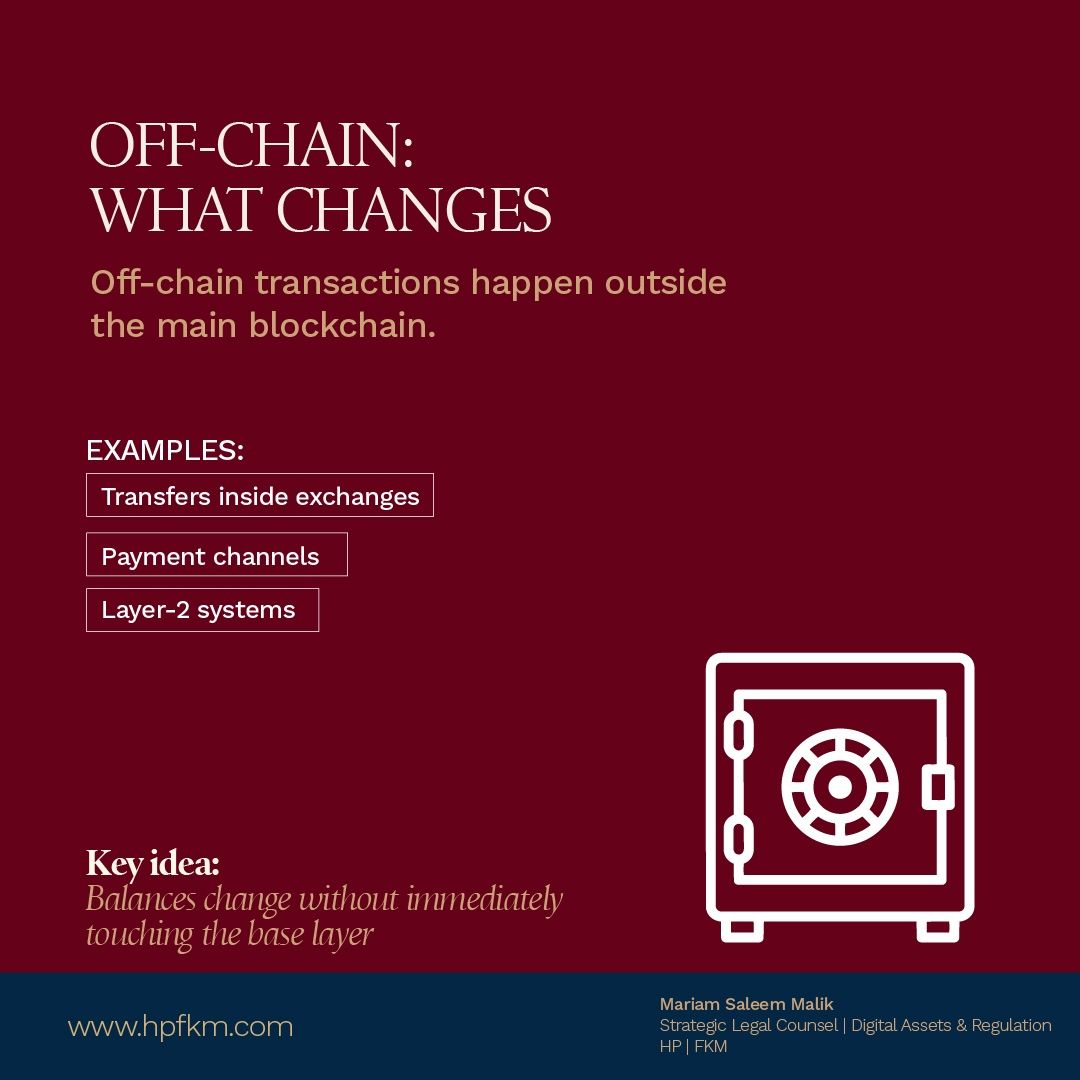
Because of this design, many systems use a combination of on-chain and off-chain processes. Off-chain systems allow transactions or data processing to happen outside the blockchain environment, enabling faster execution and lower operational costs while still maintaining the ability to settle final outcomes on-chain.
What Happens in On-Chain Transactions
On-chain transactions are those that are executed and recorded directly on the blockchain network. These transactions go through a verification process by network participants and are permanently stored within blocks of the distributed ledger.
Typically, the process includes:
Broadcasting the transaction to the blockchain network
Validation through the network’s consensus mechanism
Permanent recording within a block on the blockchain
In this structure, the blockchain itself becomes the source of truth, providing transparency and immutability for finalized transactions.
Why Off-Chain Systems Exist
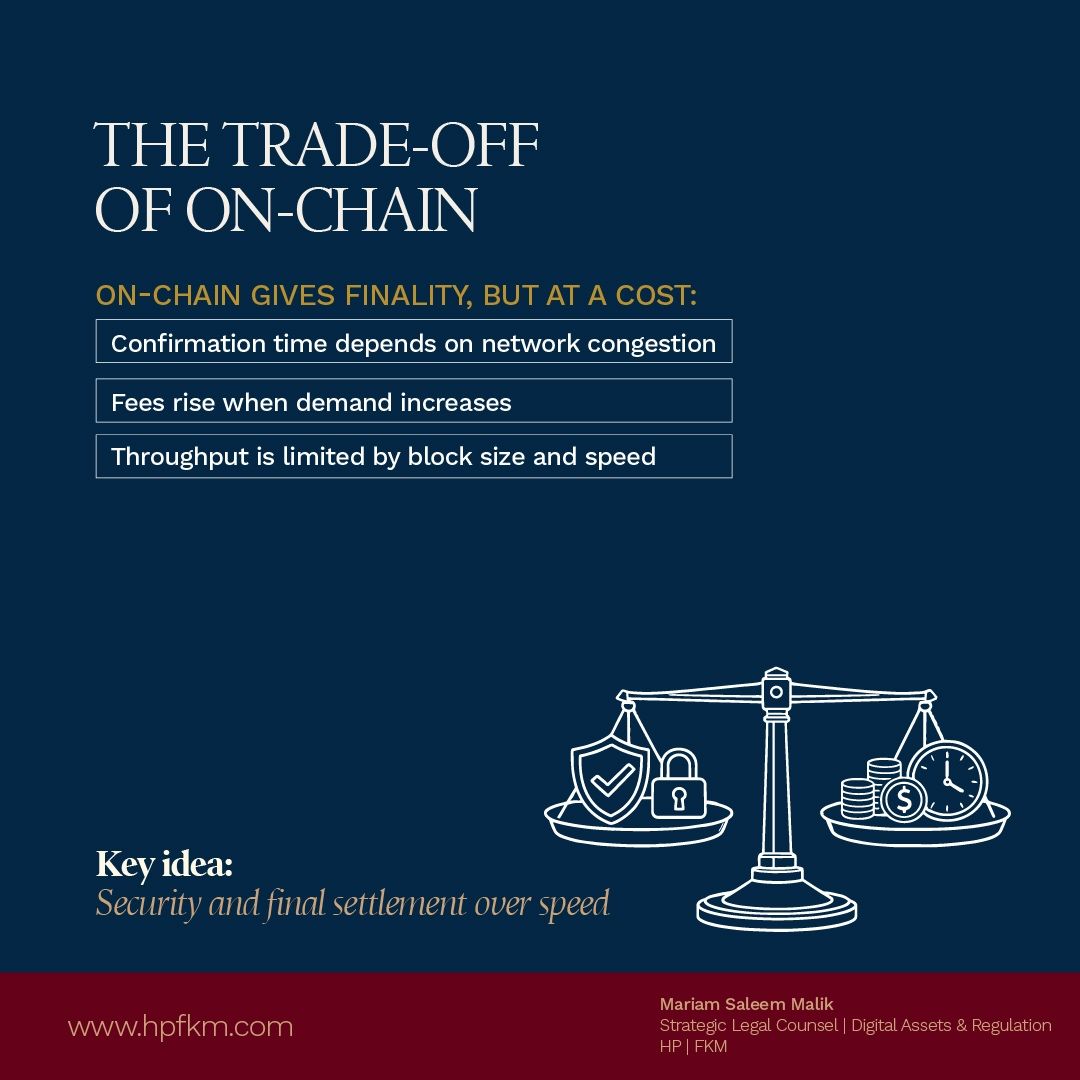
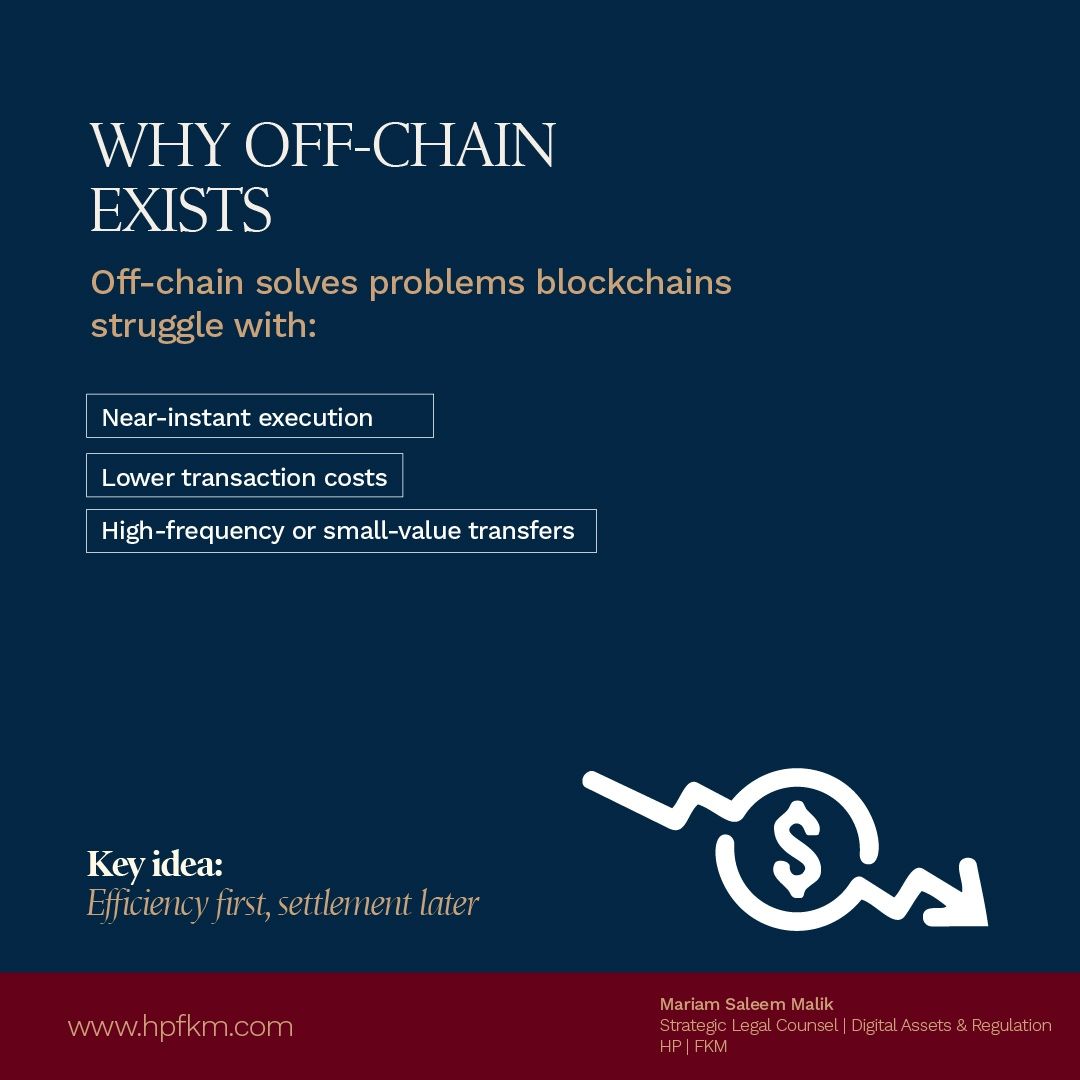
While on-chain systems offer security and transparency, they are not always ideal for high-frequency activity or large-scale transaction environments. Processing every interaction on the blockchain can create challenges related to speed, scalability, and transaction costs.
Off-chain systems address these challenges by allowing transactions to occur outside the blockchain while still maintaining a connection to it. These systems can handle faster operations and higher transaction volumes, while the blockchain remains responsible for verifying and recording the final outcome.
Designing Systems That Work Together
The future of blockchain ecosystems is not about choosing between on-chain and off-chain systems. Instead, it is about designing systems where both approaches complement each other.
Off-chain infrastructure enables speed, scalability, and efficient processing, while the blockchain acts as the final layer of verification and settlement. Together, they create a balanced architecture that supports both performance and trust within digital asset ecosystems.